
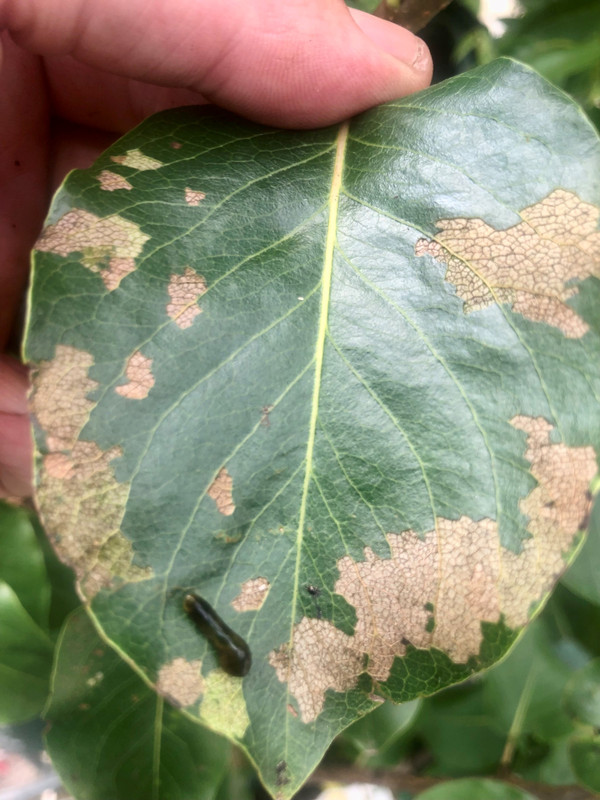
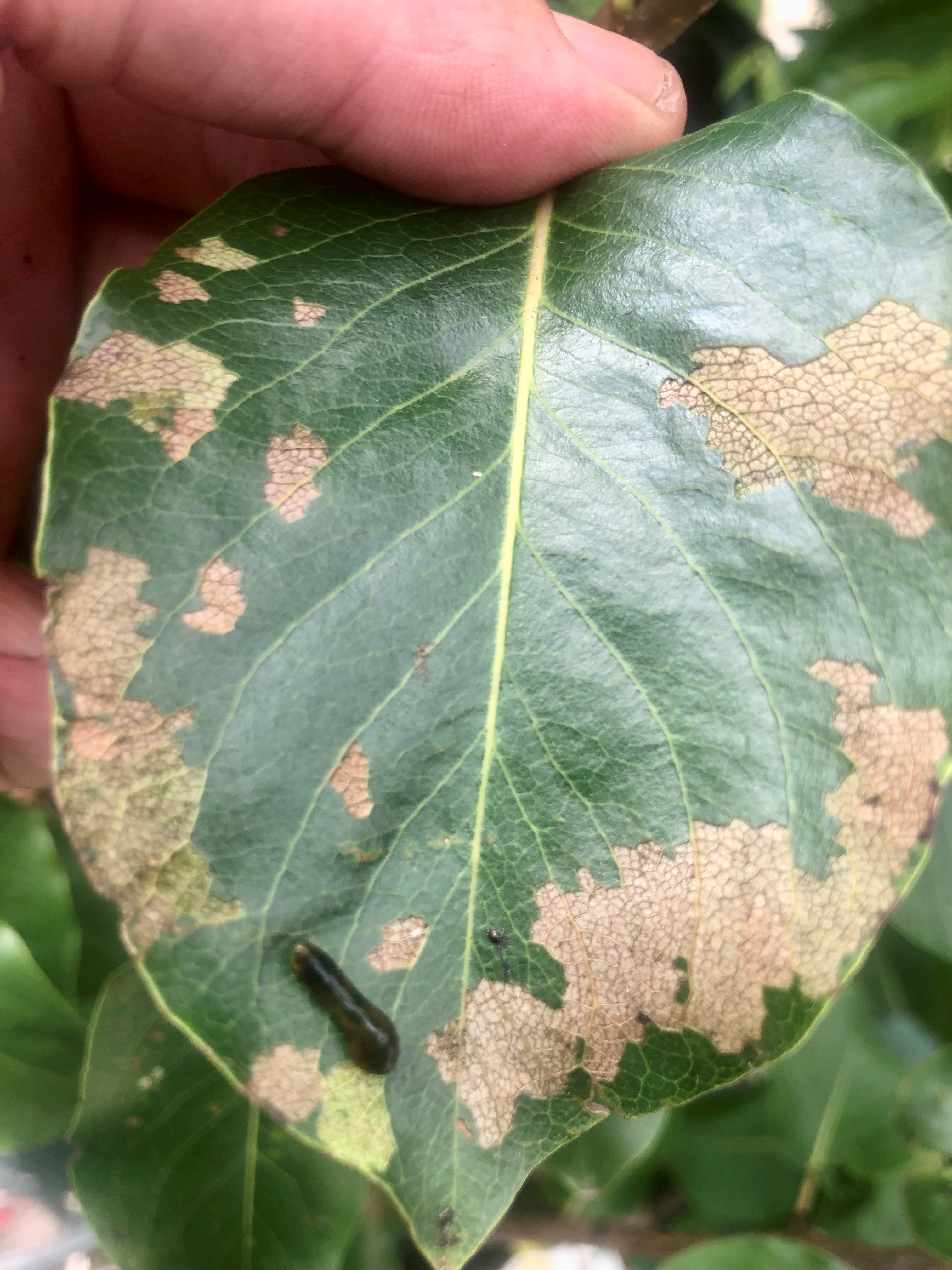
If you’ve noticed your pear, cherry or other fruit trees looking like lace, chances are you’ve met the infamous pear and cherry slug. Despite the name, they’re not slugs at all, but the larvae of sawflies, and they can quickly skeletonise leaves if left unchecked.
At Harmony, we always encourage working with nature first. Healthy gardens thrive when we support beneficial insects and choose gentle, environmentally responsible solutions wherever possible.
What Are Pear & Cherry Slugs?
Pear and cherry slugs appear as small, dark, slimy larvae on the surface of leaves. They feed on the soft leaf tissue, leaving behind a distinctive “windowpane” or skeletonised look. Heavy infestations can weaken trees, reduce photosynthesis and impact fruit production.
The good news? They’re usually easy to manage when tackled early.
Our Preferred Approach: Non-Chemical Control
1. Hand Removal & Water Spray
For light infestations, a strong jet of water can knock slugs off leaves. This is often enough to reduce numbers significantly, especially when done regularly.
2. Wood Ash or Lime Dusting
A traditional and surprisingly effective method is lightly dusting affected leaves with wood ash or garden lime. This dries out the larvae and discourages further feeding.
Important safety note: Lime dust can be abrasive, so wear eye protection and avoid applying it on windy days to prevent irritation to eyes and skin and unintended spread in the garden.
Tip: Apply on a dry day and avoid overuse to prevent altering soil pH.
3. Encourage Beneficial Insects
Nature has its own pest control team. Birds, parasitic wasps, ladybirds and other beneficial insects help keep sawfly populations in check.
At Harmony, we release beneficial insects regularly in our nursery because we believe strong ecosystems are the best long-term solution.
4. Maintain Tree Health
Well-fed, well-watered trees are more resilient to pest pressure. Mulch, organic fertilisers and good soil health all help trees recover quickly from minor damage.
When Things Get Tough: Careful Use of Controls
Sometimes infestations become severe, especially during warm, still weather. In these situations, some gardeners choose to use products such as Yates Success.
If you do decide to go down this path:
-
Only spray at dusk & when bees and pollinators are not active.
-
Avoid spraying when trees are in full flower.
-
Target only affected areas rather than blanket spraying.
-
Follow label instructions carefully.
It’s important to remember that many chemical sprays can harm bees and beneficial insects, so they should always be a last resort, not the first.
A Gentle Reminder ?
Every choice we make in the garden has an impact beyond our backyard. By starting with natural methods and using chemicals only when absolutely necessary, we protect pollinators, soil health and the wider environment.
At Harmony, we believe the best gardens are grown with care, patience and respect for nature.
If you’re unsure what’s happening on your fruit trees, bring in a leaf sample or a photo — we’re always happy to help you find the most sustainable solution for your garden.