
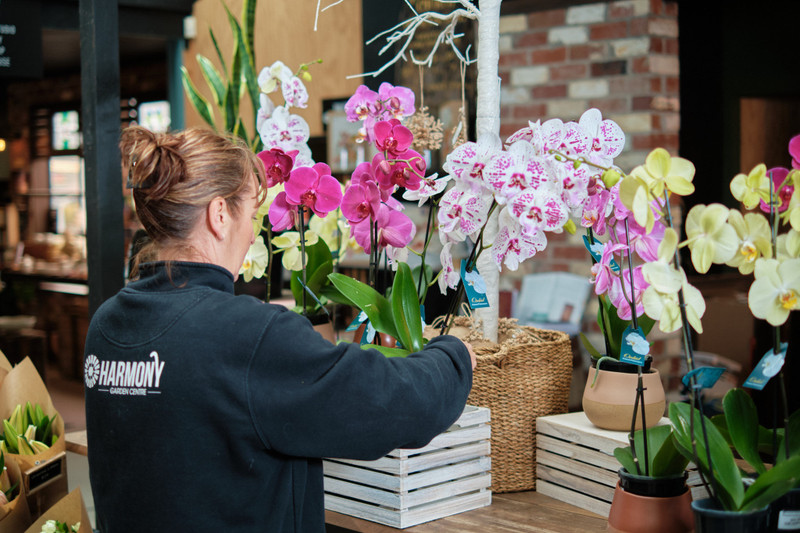
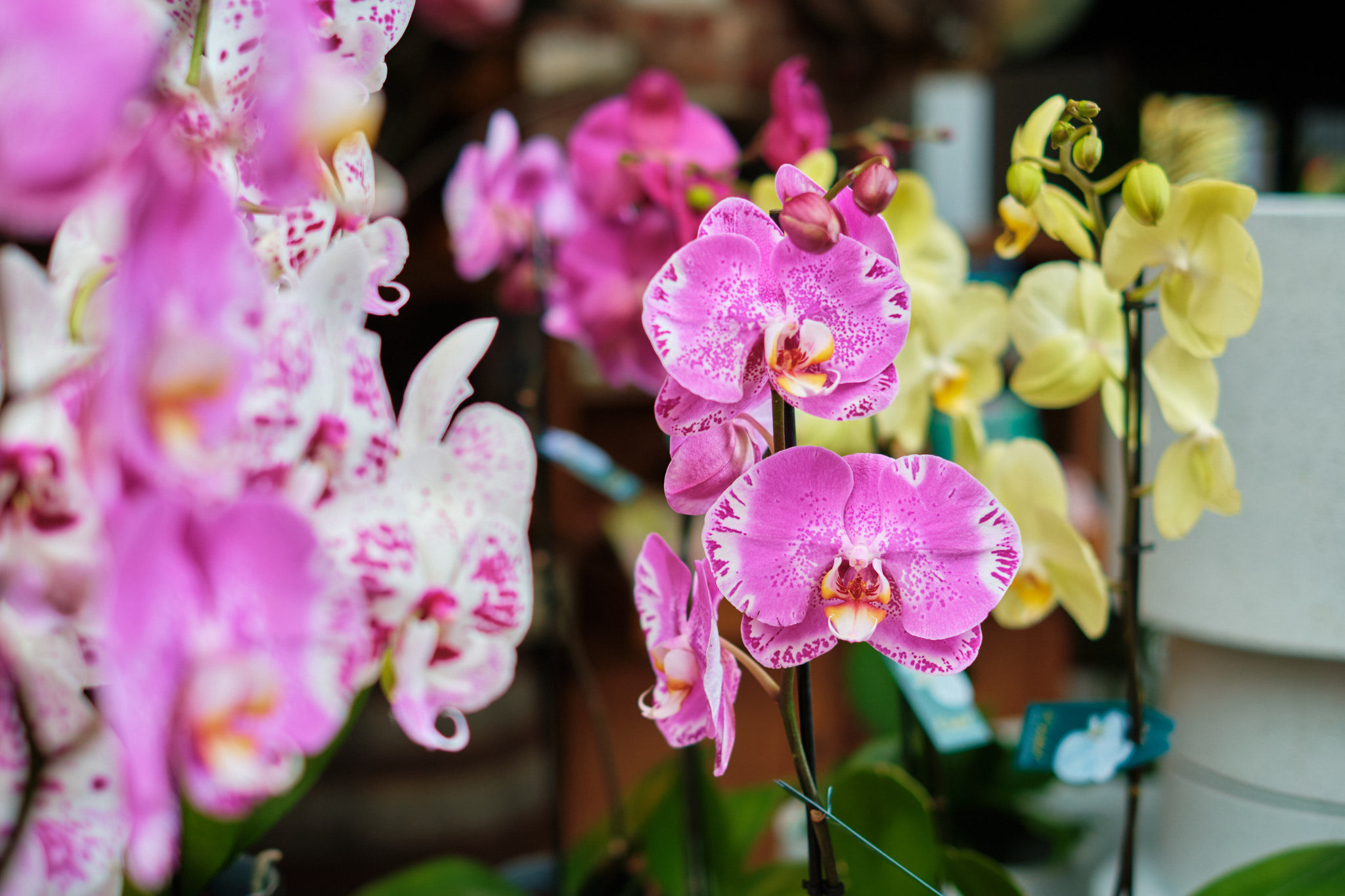
There’s something quietly special about a Phalaenopsis orchid sitting in the home. It’s not loud or showy, but it draws you in. The soft arch of the flowers, the way they seem to float, and the fact they’ll sit there in bloom for months on end… it’s a kind of calm we all need a little more of.
At Harmony, we often hear people say orchids are hard. The truth is, they’re just misunderstood. Once you understand how they grow in nature, everything starts to fall into place and caring for them becomes simple, even enjoyable.
Phalaenopsis orchids are what we call epiphytes, which means in their natural environment they grow attached to trees, not in soil. Their roots are used to air, light, and quick drainage. This is the biggest shift in thinking and the reason so many struggle with them early on. Treat them like a regular houseplant in potting mix and they’ll never quite thrive, but give them airflow and the right conditions and they’ll reward you time and time again.
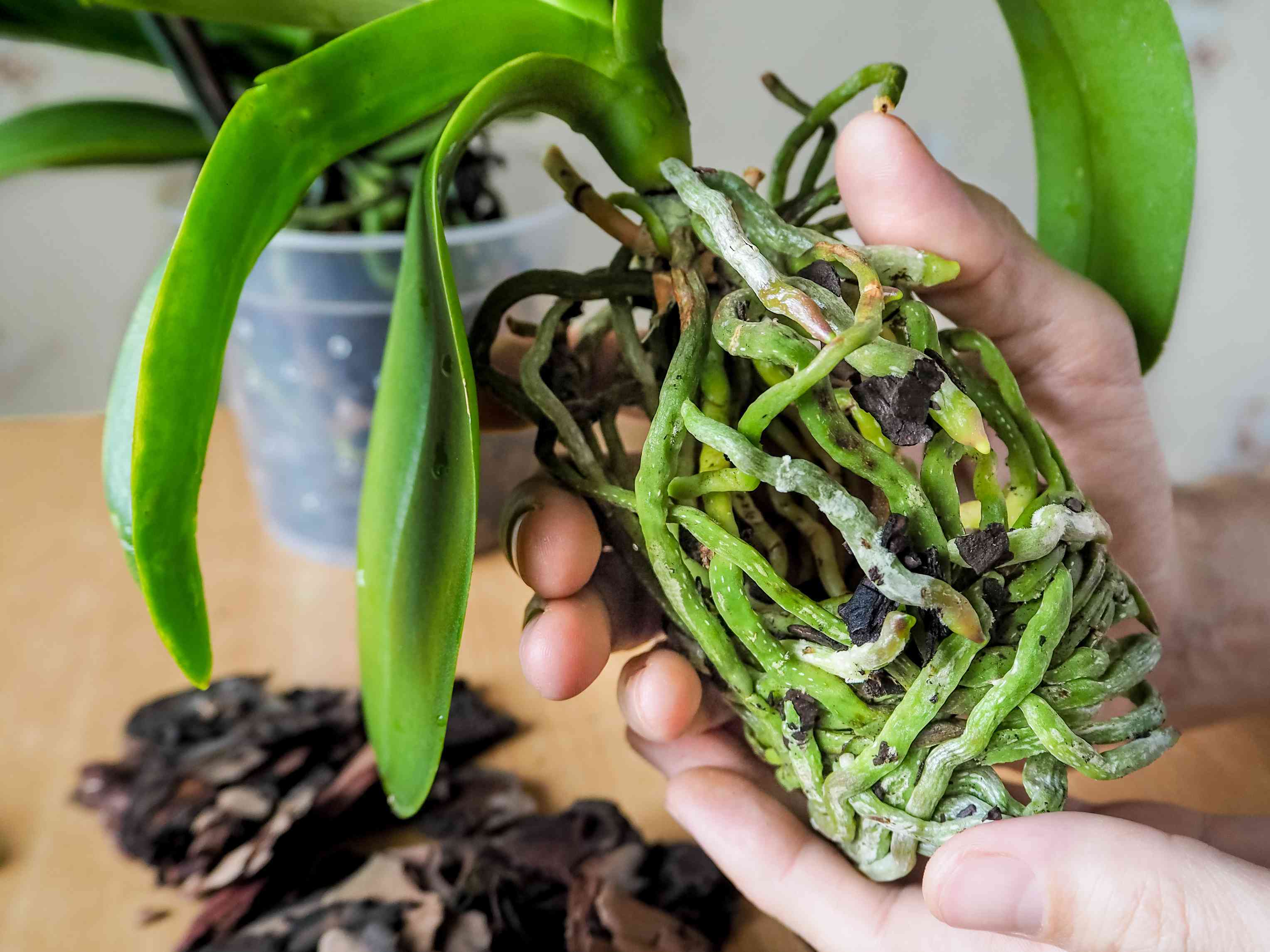
Repotting is less about giving your orchid more space and more about refreshing the environment around the roots. Over time, the bark mix breaks down and begins to hold too much moisture, which can lead to root stress. You’ll usually find your orchid is ready when the mix starts to look fine or compacted, or when the roots are filling the pot.
The process itself is quite gentle. Ease the plant out of its pot and take a moment to look at the roots. Healthy roots will feel firm and appear silvery or green, while any that are soft or dark can be removed. Once cleaned up, the plant can be settled back into a pot with fresh orchid bark, allowing the roots to sit naturally without being forced or buried too deeply. Keeping the crown of the plant above the mix is important, as this is where new growth emerges and where moisture should never sit.
At Harmony, we often recommend clear pots, not just because they look great, but because they allow you to understand your plant better. You can see when the roots are dry, when they’ve just been watered, and how healthy they are over time.
Watering is where the magic really happens, and also where most people lose confidence. The key is not how often you water, but how you water. Phalaenopsis orchids prefer a proper soak followed by a dry period, rather than small frequent sips.
Taking your orchid to the sink and allowing it to soak thoroughly before draining completely mimics what happens in nature. The roots take up what they need and the excess moves away quickly. What you’re looking for is that visual cue from the roots themselves. When they appear silvery and dry, it’s time to water. When they are green, they’re still hydrated and happy.
In Tasmania, this rhythm tends to sit somewhere around once every two weeks, depending on the season and the warmth of your home. In winter, they naturally slow down, and less is more.
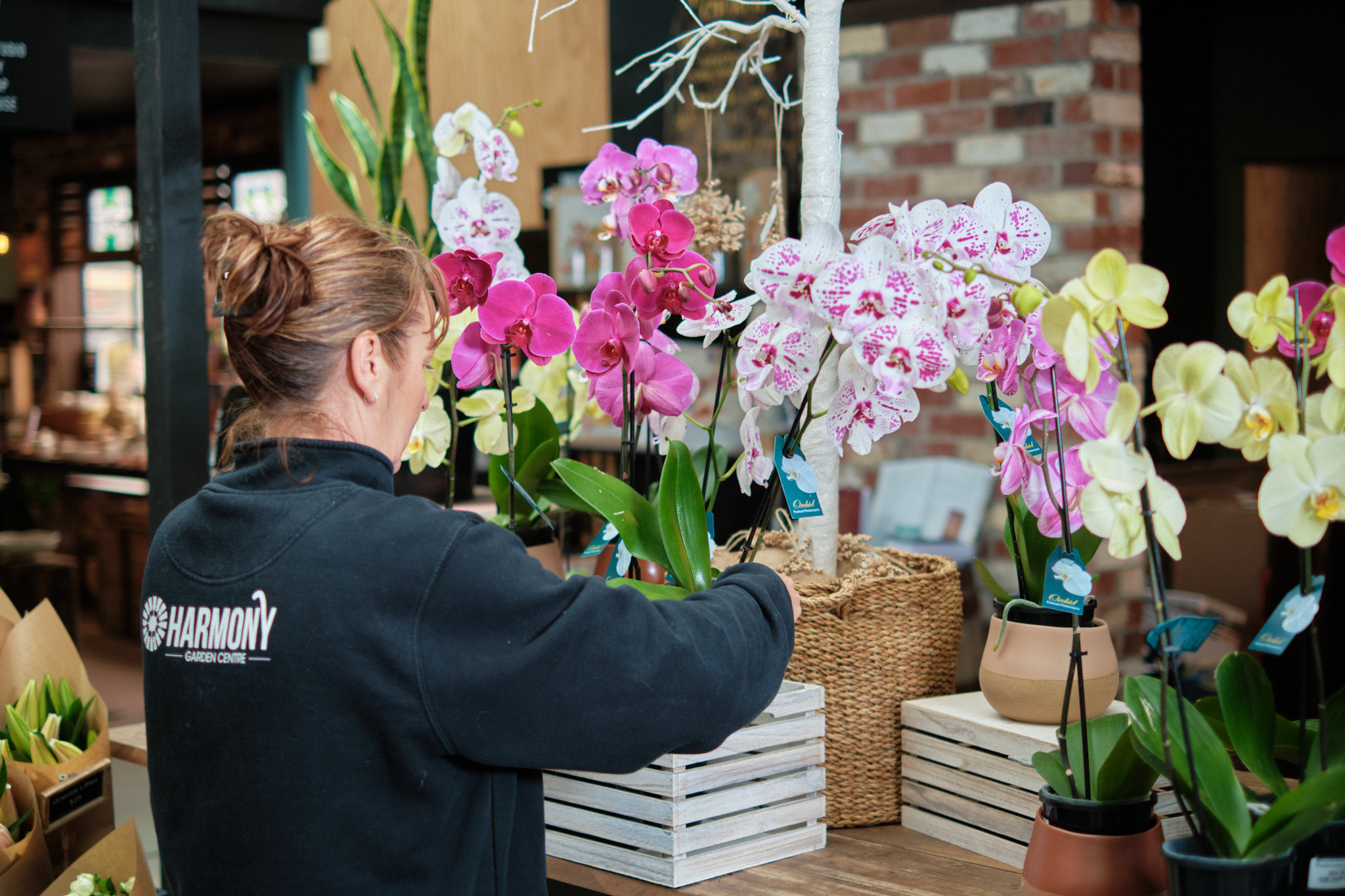
When the flowers eventually finish, it’s not the end, it’s just the next phase. The plant is simply resting and preparing for what comes next. You can choose to trim the spike back gently or remove it entirely, depending on the strength of the plant and your preference.
With a little care, a touch of feeding during active growth, and the right conditions, your orchid will begin the cycle again, often even stronger than before.