
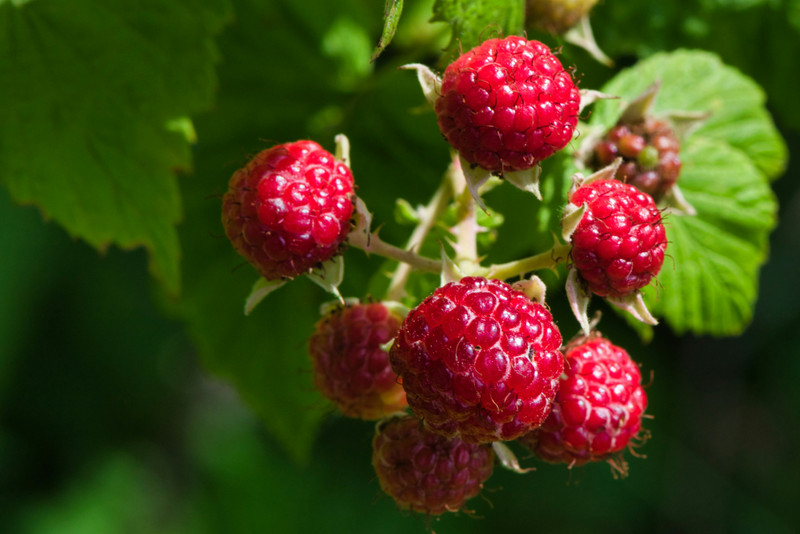
Growing Raspberries in Tasmania
There is something incredibly satisfying about walking into the garden on a summer morning and picking a handful of sun-ripened raspberries straight from the cane. Whether they're eaten fresh, turned into jam or frozen for later, raspberries are one of the most rewarding fruits you can grow in a Tasmanian garden.
The good news is that raspberries are relatively easy to grow once you understand how they fruit and how to prune them correctly. One of the biggest areas of confusion for gardeners is understanding the difference between primocane and floricane varieties, so let's start there.
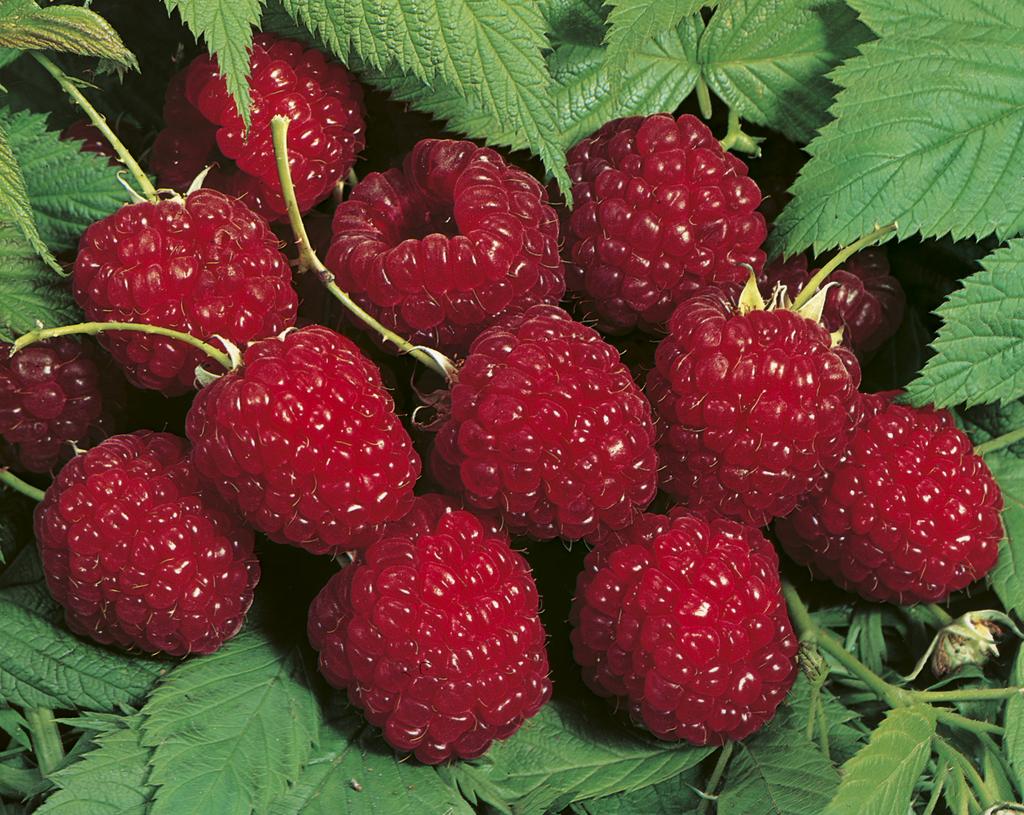
The Two Types of Raspberry Canes: Primocanes vs Floricanes
Raspberries produce fruit on canes that grow from the plant's root system. These canes fall into two distinct categories: primocanes and floricanes.
Primocanes are the fresh green canes that emerge during the current growing season. Some varieties, known as primocane-fruiting raspberries, will produce fruit on these canes in their very first year. Examples include Autumn Bliss and Heritage.
Floricanes are canes that have grown through one season and survived the winter. These mature canes produce fruit during their second year before naturally dying back. Examples include Chilcotin, Chilliwack, Lloyd George and Willamette.
Understanding which type you are growing is important because it determines how and when you prune.
Pruning Techniques for a Better Harvest
Pruning raspberries isn't difficult, but the approach differs depending on the type you are growing.
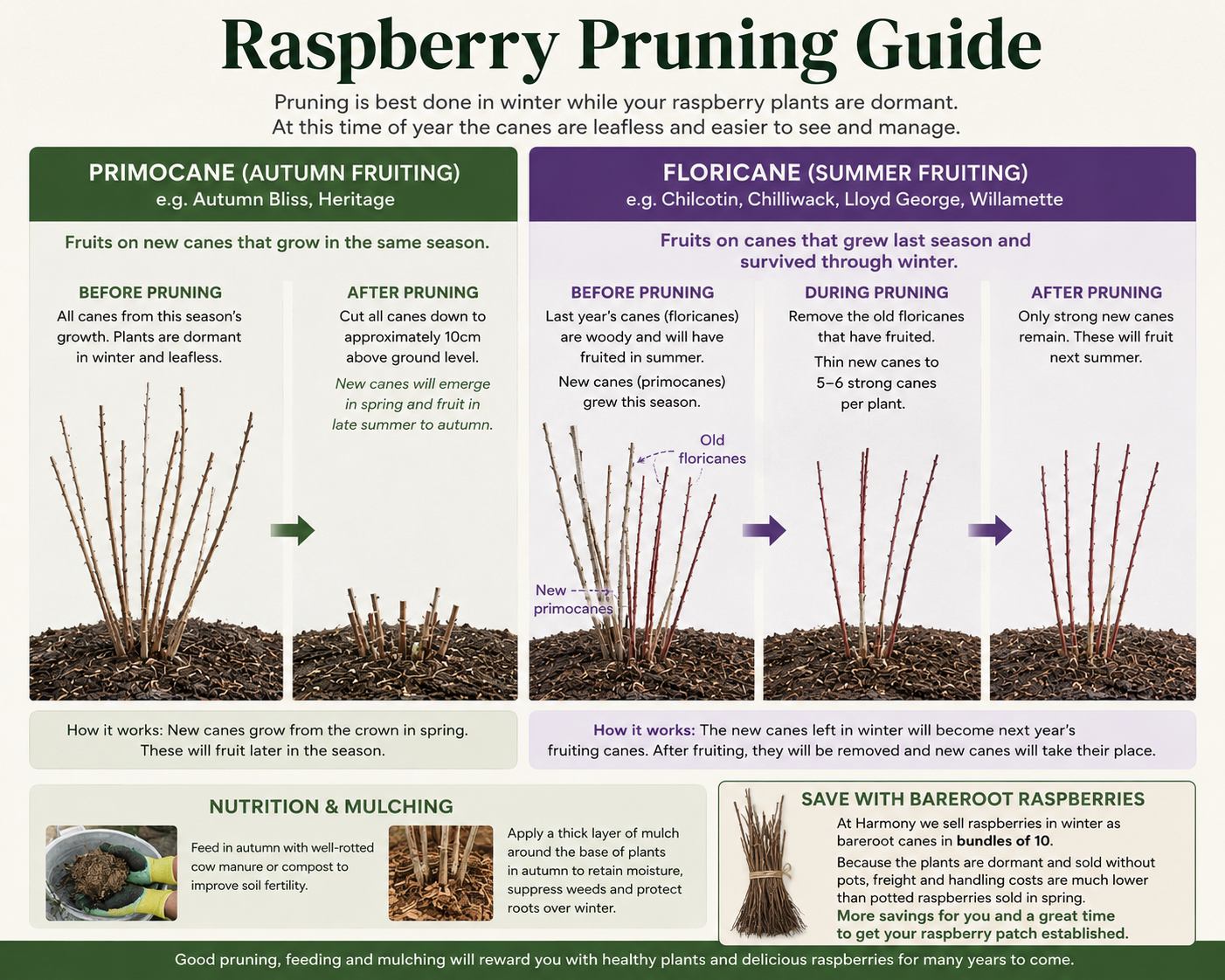
Pruning Primocane Varieties
Primocane-fruiting raspberries are the easiest to manage. These varieties fruit on the current season's growth, so once harvesting is finished simply cut all canes down to approximately 10cm above ground level during late autumn or winter.
While it can feel drastic, this encourages vigorous new growth and ensures a productive crop the following season.
Pruning Floricane Varieties
Floricane varieties require a little more attention. Once the crop has finished, the canes that produced fruit will naturally die back and should be removed at ground level.
The younger canes that grew during the current season should be retained as these will become next year's fruiting canes. Thin these to around five or six strong canes per plant to improve airflow, reduce disease pressure and maximise fruit production.
Why Winter Is the Best Time to Buy Raspberries
At Harmony we offer raspberries during winter as bareroot canes bundled in packs of ten.
Because the plants are dormant and sold without pots, freight and handling costs are significantly lower than potted raspberries sold in spring. Rather than paying for additional potting mix, containers and transport costs, we can pass those savings directly on to our customers.
For gardeners looking to establish a productive berry patch, winter is by far the most economical time to plant.
Choosing the Right Variety
One of the great things about raspberries is that different varieties offer different harvest times, flavours and growth habits.
Autumn Bliss
Primocane Fruiting
Autumn Bliss remains one of the earliest autumn-fruiting varieties available. It produces large, sweet berries and is often cropping in its first season after planting. It is a fantastic choice for gardeners wanting quick results.
Heritage
Primocane Fruiting
Heritage is one of the most widely grown raspberries in the world and for good reason. It produces exceptional flavoured fruit over a long harvest period and performs reliably across a wide range of growing conditions.
Chilcotin
Floricane Fruiting
Chilcotin is renowned for producing large, bright red berries with excellent flavour and strong disease resistance. It is a heavy cropper and a reliable performer in Tasmanian gardens.
Chilliwack
Floricane Fruiting
If productivity is your priority, Chilliwack is hard to beat. It produces outstanding yields of large, firm berries that are perfect for fresh eating, freezing and preserving.
Lloyd George
Floricane Fruiting
A true heritage favourite, Lloyd George is grown primarily for its rich traditional raspberry flavour. Many gardeners consider it one of the best tasting raspberries available.
Willamette
Floricane Fruiting
Willamette has long been popular with both home gardeners and commercial growers. It performs particularly well in cooler climates and produces generous crops of dark red berries with excellent flavour.
If space allows, I always recommend planting a mix of both primocane and floricane varieties. By doing so, you can significantly extend your harvesting season and enjoy fresh raspberries for many months of the year.
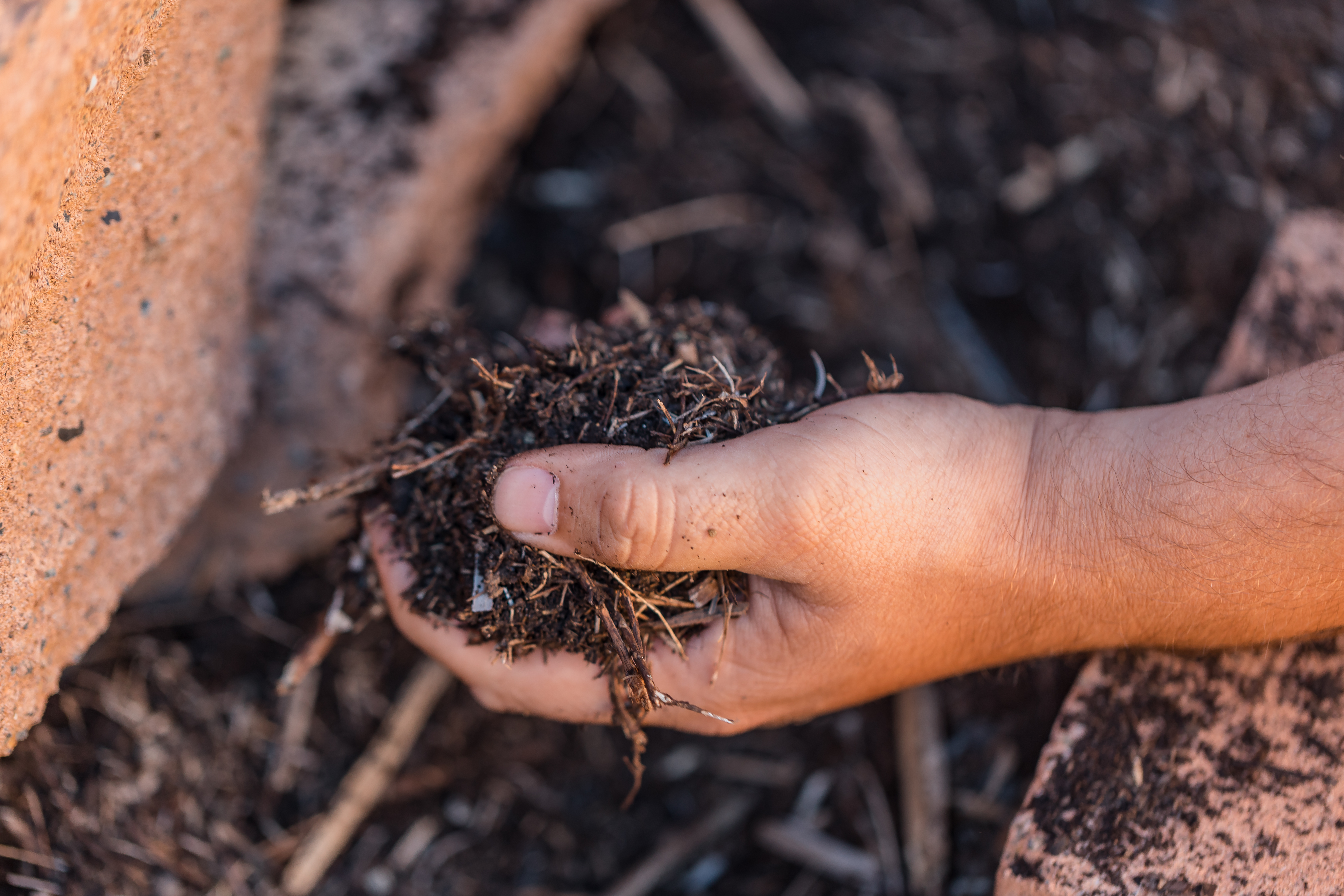
The Importance of Nutrition and Mulching
Good soil preparation will reward you with stronger growth and larger crops.
Raspberries prefer a moist but well-drained soil and generally dislike heavy clay conditions. If you have sandy soil, don't be discouraged. With the addition of compost and regular watering through summer, raspberries can still perform exceptionally well.
Cow manure is one of my preferred soil conditioners for raspberries. It provides valuable nutrients while typically containing fewer weed seeds than many other animal manures.
Mulching is equally important. A generous layer of mulch applied around the base of the plants during autumn helps retain moisture, regulate soil temperature, suppress weeds and gradually improve soil structure as it breaks down.
Combined with regular watering and annual feeding, mulching will help create the ideal environment for healthy canes and heavy crops.
A Berry Good Investment
Few plants offer the return on investment that raspberries do. A small planting can provide kilograms of fruit year after year, often producing more than enough for fresh eating, freezing, baking and preserving.
By understanding the difference between primocanes and floricanes, pruning correctly and maintaining healthy soil through mulching and feeding, you'll be rewarded with productive plants and delicious harvests for many seasons to come.
Happy gardening,
Andrew Clark